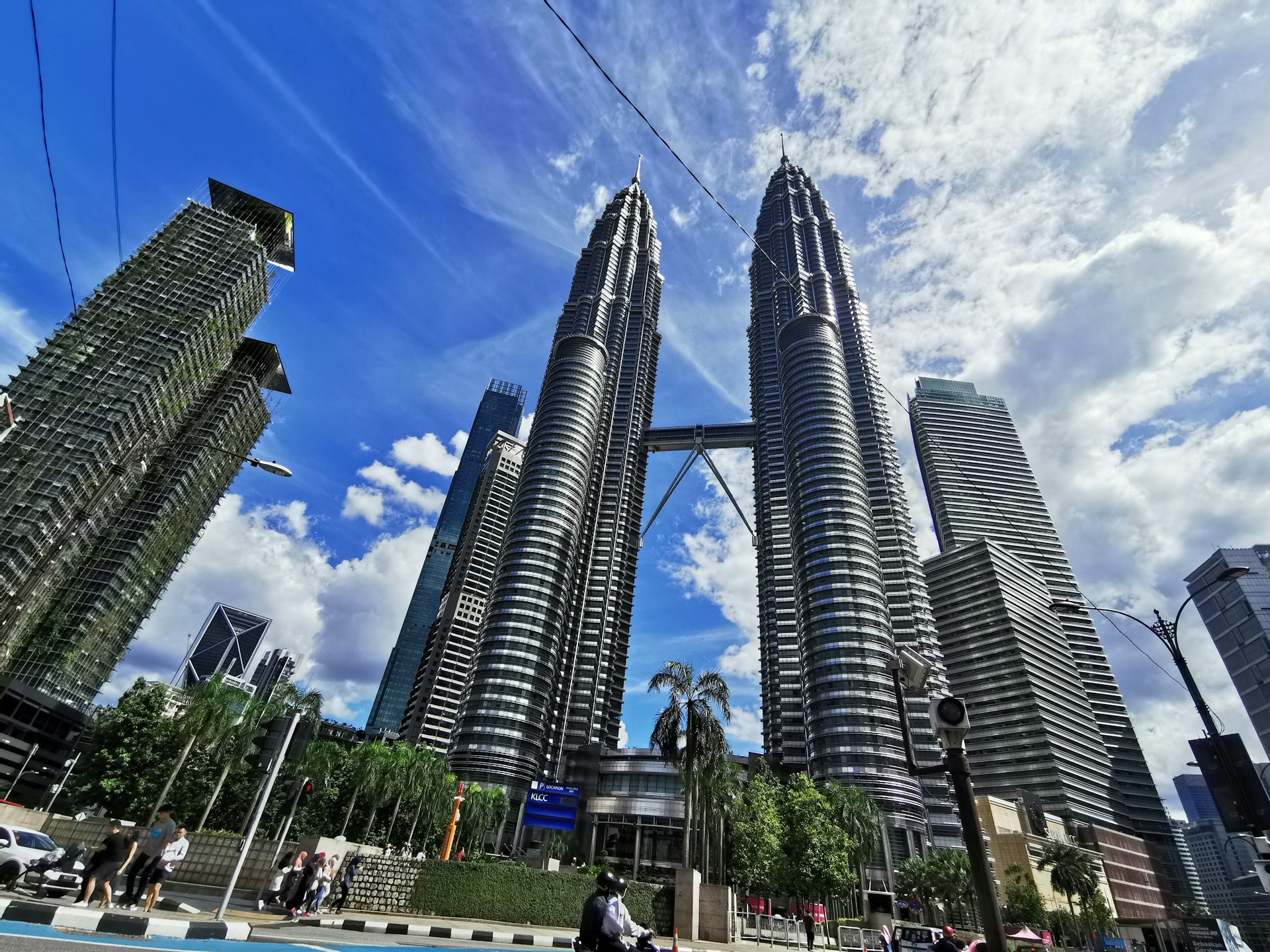
Southeast Asia is becoming an increasingly attractive destination for technology development due to a combination of economic growth, digital adoption, talent availability, and strategic positioning.
1. Large and Growing Digital Market
Southeast Asia has a population of over 680 million people, with a rapidly expanding middle class and high smartphone penetration. Countries such as Indonesia, Vietnam, Thailand, Malaysia, and Philippines provide a massive customer base for digital products and services.
This allows technology companies to develop solutions and immediately test them in large, diverse markets.
2. Strong Talent Pool
The region produces hundreds of thousands of graduates annually in engineering, computer science, and related disciplines. Countries such as:
- Vietnam have become known for software engineering talent.
- Malaysia offers multilingual professionals with strong enterprise IT experience.
- Philippines has a large English-speaking workforce.
- Singapore attracts global technology specialists.
3. Cost Advantage
Compared to technology hubs in the United States, United Kingdom, or Australia, development costs are generally lower while maintaining high-quality output.
This enables organizations to:
- Build larger engineering teams.
- Extend development budgets.
- Operate 24/7 support and DevOps functions.
4. Government Support and Digital Policies
Many governments actively promote digital transformation through:
- Tax incentives.
- Technology parks.
- Startup grants.
- Digital economy blueprints.
- AI and cloud adoption programs.
Examples include:
- Singapore’s Smart Nation initiatives.
- Malaysia’s digital economy programs.
- Indonesia’s startup ecosystem development.
5. Rise of Regional Technology Champions
The success of companies such as:
- Grab
- FPT Software
- GoTo Company
has demonstrated that globally competitive technology companies can be built from Southeast Asia. Their growth has created experienced engineers, architects, product managers, and startup founders who continue to strengthen the ecosystem.
6. Strategic Geographic Location
Southeast Asia sits between major economic powers such as:
- China
- India
- Japan
- Australia
This makes it an ideal location for regional headquarters, development centers, and support operations.
7. Cloud and Data Centre Expansion
Major cloud providers have invested heavily in the region:
- Amazon Web Services (AWS)
- Microsoft Azure
- Google Cloud
New data centers improve:
- Application performance.
- Regulatory compliance.
- Disaster recovery capabilities.
- AI and analytics workloads.
8. Banking and Fintech Demand
Southeast Asia remains one of the fastest-growing regions for:
- Digital banking.
- Payments.
- eKYC.
- Open banking.
- Cybersecurity.
- Financial inclusion.
For professionals with experience in banking technology, integration, cloud, operations, security, and governance, the region presents significant opportunities as banks modernize legacy platforms and adopt AI-driven services
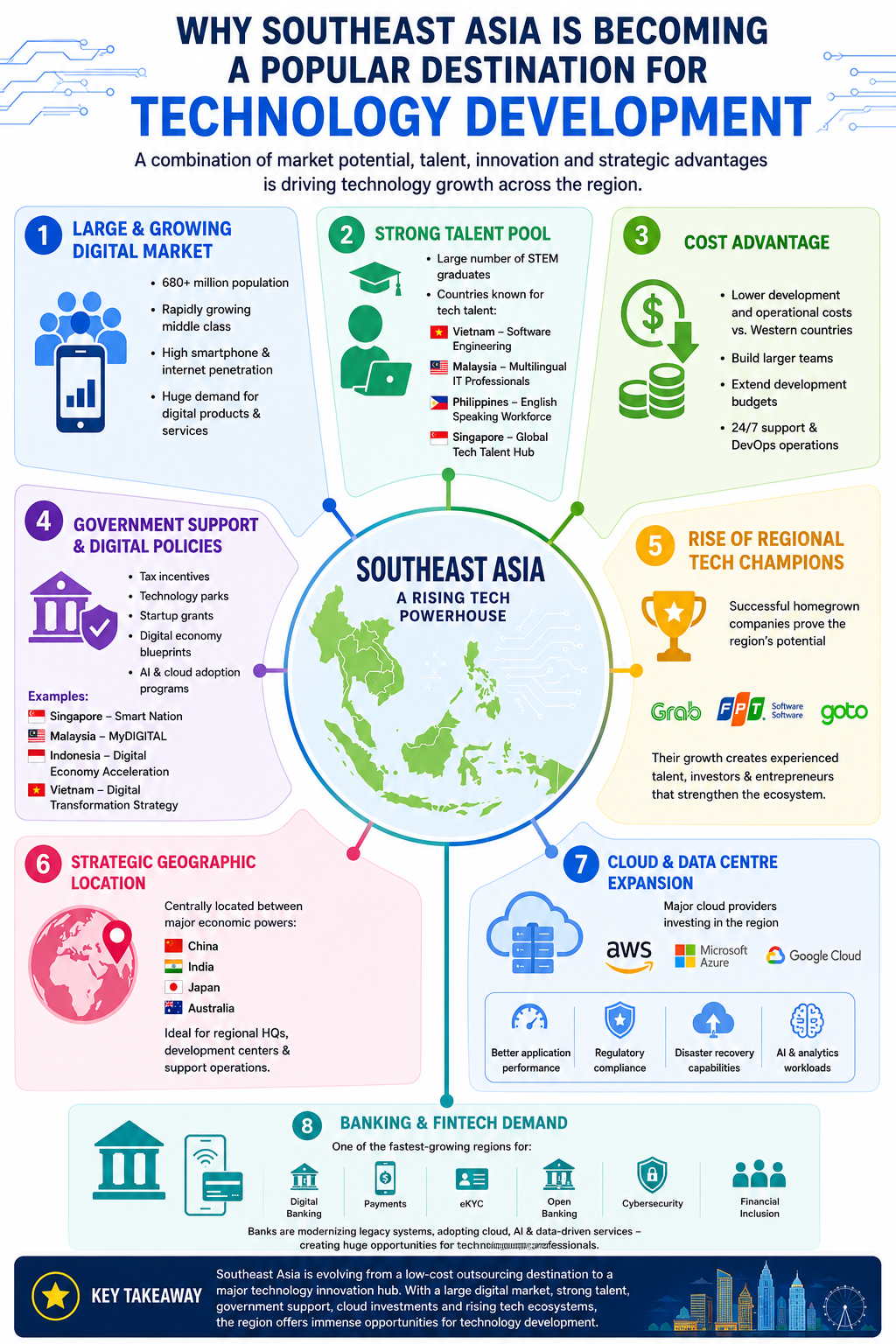
Southeast Asia is not just becoming a low-cost outsourcing destination—it is evolving into a major technology innovation hub. The combination of a large digital population, strong engineering talent, government support, growing startup ecosystems, cloud investments, and demand from industries such as banking, fintech, e-commerce, and AI makes the region one of the most attractive technology growth markets in the world. Countries such as Singapore, Malaysia, Vietnam, and Indonesia are increasingly being viewed as technology development hubs rather than just support centers.