
With the current hyper-connected digital landscape, the exchange of data between systems, partners, and users is a core business function. Whether it’s financial records, customer information, supply chain data, or internal communications, organizations are transferring sensitive data as files at an ever-increasing rate. But with this rising data movement comes greater responsibility and risk.
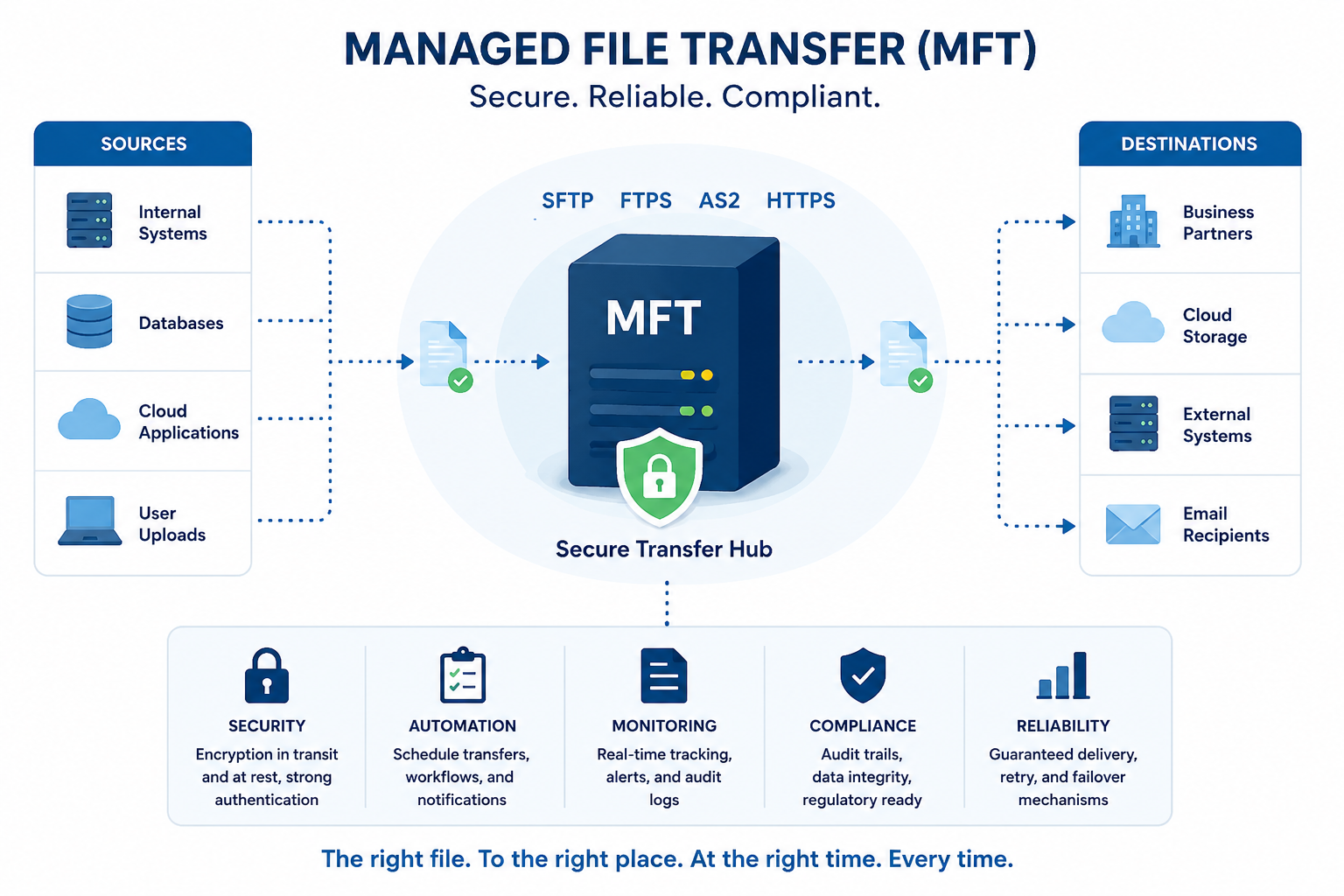
Managed File Transfer (MFT) is a strategic solution that addresses these challenges by providing a secure, centralized, and auditable framework for moving data as files within an organization and between external partners.
MFT isn’t just another tech acronym or a luxury for large enterprises — it’s a critical tool for any organization that takes data security, compliance, and operational efficiency seriously.
What is MFT?
Managed File Transfer (MFT) refers to a secure, centralized platform that facilitates the automated, encrypted, and monitored exchange of data between systems, people, and organizations. Unlike traditional file transfer methods like FTP, email, or cloud sharing services, MFT is designed with security, compliance, and reliability at its core.
Why MFT is Essential for Modern Organizations
Data Security in an Insecure World
Cyber threats are more sophisticated than ever. Using outdated or unsecured file transfer methods like FTP or email can expose your organization to serious vulnerabilities e.g. data breaches, ransomware, and compliance failures.
MFT platforms offer end-to-end encryption, secure protocols (SFTP, HTTPS), and strong access controls, ensuring files are protected at all stages – in transit and at rest.
Compliance is Not Optional
From GDPR, HIPAA, SOX, to PCI-DSS, regulatory frameworks demand strict control over how data is handled, stored, and shared. A single compliance failure can lead to heavy fines, reputational damage, or even legal action.
MFT helps organizations meet and maintain compliance by offering features like:
- Detailed audit logs
- User access controls
- Automated workflows with policy enforcement
- Data retention and deletion policies
Operational Efficiency through Automation
Manual file transfers are error-prone, time-consuming, and inefficient. MFT solutions enable organizations to automate routine file movement, reducing human error and freeing up IT teams for higher-value tasks.
With MFT, you can:
- Schedule transfers
- Trigger workflows based on events
- Ensure delivery confirmation
- Monitor processes in real-time
This not only improves reliability but also supports scalability as your data needs grow.
Centralized Visibility and Control
One of the major downsides of traditional file transfer methods is the lack of visibility. You often don’t know if a file was sent, received, or compromised.
MFT platforms provide a centralized dashboard to track all file movement, user activities, and system health. This level of visibility is crucial for:
- Troubleshooting issues
- Proving compliance in audits
- Detecting suspicious activities
Enabling Seamless Collaboration
As organizations expand — across borders, time zones, and digital ecosystems — sharing data securely with partners, vendors, and remote employees becomes a strategic necessity.
MFT supports secure collaboration without sacrificing speed or usability. Partners can access files via secure web portals, APIs, or automated workflows — all under tight governance.
Scalability and Integration
Unlike basic file transfer tools, MFT solutions are built to integrate with enterprise applications (like ERPs, CRMs, and cloud platforms) and handle large volumes of data without performance degradation. As your business scales, MFT scales with it — reliably and securely.
MFT is No Longer a “Nice-to-Have”
Organizations today face a complex balancing act: they must move more data, more quickly, with fewer errors — all while maintaining strict compliance and airtight security. Managed File Transfer hits that sweet spot.
It’s not just a tool for IT — it’s a strategic asset for risk management, compliance, and digital transformation. In a world where a single data mishap can cost millions, investing in MFT is investing in your organization’s future.